
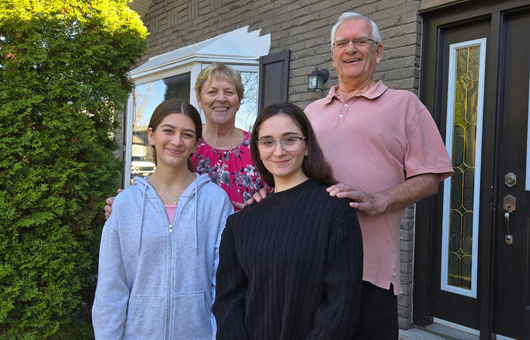
On January 28, 2026, Marilyn McEwen was waiting in her car to pick up her granddaughters from high school. She had gone inside briefly to let them know she was there before heading back to the driver’s seat.
When MacKenzie, her 15-year-old granddaughter, came outside, she noticed something was off. Marilyn was speaking, but her words weren’t coming out clearly.
The teenager quickly texted her older sister inside the school: Something’s wrong with Nana. Come fast.
Her 17-year-old granddaughter, Payton, rushed out, took one look at Marilyn and immediately recognized the signs.
“Nana’s having a stroke.”
She ran back inside and told their principal to call 911. Within minutes, paramedics arrived. Marilyn was taken by ambulance to London Health Sciences Centre (LHSC), where the stroke team had already been alerted and was ready for her arrival.
Tests confirmed two clots in her brain, a rare condition known as bilateral intracranial occlusion. Dr. Alex Fraser, a neurologist, administered clot-busting medication and a neuroradiologist, performed a procedure to remove the blockages. Just one hour after the stroke began, blood flow was fully restored.
When Marilyn woke up, a doctor told her she had suffered a stroke. She didn’t believe them as she felt completely normal.
During her recovery on the Hyperacute Stroke Unit, Marilyn gained a deep appreciation for the people involved in her care. She watched nurses spend hours patiently encouraging patients to speak a single word or move a finger. When those breakthroughs happened, the entire unit celebrated.
“From the doctors to the cleaning staff, everyone was wonderful,” she says.
In quieter moments, Marilyn would really enjoy when staff would stop to chat with her about family and life. It felt like talking with friends, which helped ease the stress of being in the hospital.
Her husband, Dave, was impressed by the coordination he had witnessed.
“Everyone knew their role as soon as we arrived,” he says. “The whole plan was so well executed.”
Marilyn returned home after only three days at University Hospital. Because her granddaughters recognized the stroke symptoms and the hospital team acted so quickly, she suffered no lasting effects. Today, she feels like she needs her medical records just to prove how serious the situation actually was.
While Marilyn is grateful for her own outcome, she knows that providing this level of care requires significant resources. Her experience has given her a new perspective on the impact of philanthropy.
“It’s so important to keep donations coming into the hospital so teams can continue providing the kind of exceptional care I received,” she explains. “That means having the equipment, technology and support they need to act fast when every second matters.”
Marilyn is back to enjoying time with her close-knit family, including the granddaughters she proudly calls heroes. Every now and then, the weight of what happened catches up to her.
“I’m still here with them,” she says. “I can still see them and be involved. You don’t think about it all the time, but every so often, it hits you … things could have been very different.”
You’re where change begins!
Your generosity helps patients access the care, technology and expertise they need to overcome life-changing diagnoses.