

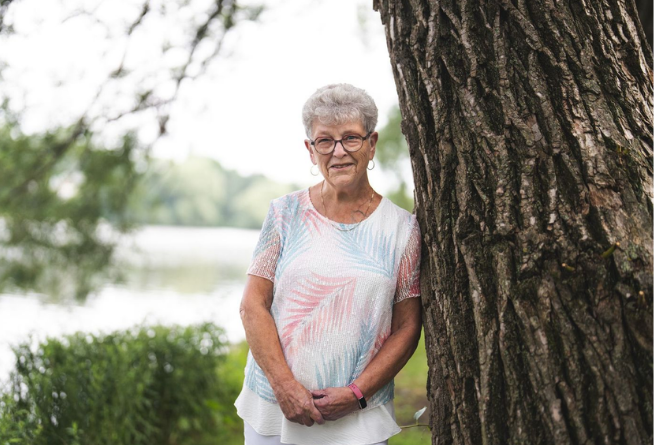
Linda Scammell still remembers the moment she realized something was wrong. She was working in a factory in Stratford when she felt something unusual in her breast. She checked herself when she returned home and discovered a lump.
Her family doctor quickly referred her to a specialist. Within days, Linda was in hospital undergoing a mastectomy. After he surgery, she regularly travelled from Stratford to London for radiation treatments.
“The radiation took a lot out of me, but I still had to take care of my three young children at home. My youngest was only five at the time,” Linda remembers.
Her family was also managing the cost of travelling to London and a drop in income while Linda was unable to work.
Then came expenses she had not anticipated. The mastectomy changed Linda’s body in a significant way. She needed a breast prosthesis, specialized bras and swimsuits that helped her feel comfortable in her clothes and go about daily life.
A breast prosthesis is an artificial breast form worn after surgery. It can help restore balance after a breast is removed and may prevent back, neck and shoulder problems. A mastectomy bra is specially designed to support the weight of the prosthesis
and hold it securely in place. These products need to be replaced over time as they wear out or a person’s needs change.
“For years, I was paying for everything myself,” she says.
One day, a woman at a local store told Linda that she might qualify for financial assistance. She helped Linda complete the paperwork and Linda was able to receive support through the Patient Assistance Program.
Today, generous donations continue to make this funding available to patients and families facing costs not covered by the health-care system. Donor support ensures that funding is available for things like transportation, parking, medications, prostheses, mastectomy bras and other urgent needs. And, because this kind of support is so important, Patient Assistance Programs have been set up in areas including renal, mental health and women’s care.
Facing cancer or another serious health issue is already an emotional battle. Having to find a way to pay for expenses not covered by the government makes recovery so much harder. When patients cannot afford these out-of-pocket costs, they may be forced to go without supports that could help them get better. Financial assistance can give patients and their families one less thing to worry about so they can focus on healing.
The kindness Linda experienced during an overwhelming time has stayed with her. Decades later, it still motivates her to help others where she can.
She has volunteered with her local Army, Navy and Air Force Veterans organization for approximately 40 years and donates to cancer-related causes. One Christmas, when her children said they did not need gifts, she donated the money she would have spent in their names.
She often speaks with people who have been diagnosed with cancer. She listens, shares what helped her and points them toward resources they may not know about. She remembers how much it meant when another survivor visited her during her own treatment.
Donors may never meet the patients and families who benefit from their generosity, but Linda knows firsthand the difference their gifts can make.
“Without donors, this kind of assistance wouldn’t be there for the people who need it,” she says.
The donor-supported Patient Assistance Programs ease some of the financial pressure so patients and families can put more of their energy toward recovery.
You’re where change begins!
Your generosity helps patients access the care, technology and expertise they need to overcome life-changing diagnoses.