

There are many things a patient might remember about having a cardiac procedure.
The monitors. The unfamiliar room. The many people working around them as they prepare for what comes next.
They might also remember a blanket.
In the cardiac procedure areas at London Health Sciences Centre (LHSC), rooms are intentionally kept cool to reduce infection risk. For staff, that temperature is manageable. They are moving throughout the day and can add another layer if needed. Patients, however, may be lying still for long periods wearing only a hospital gown.
Some also arrive with circulation issues or compromised cardiac output, which can make it harder to stay warm. Older patients can be particularly sensitive to the cold.
That makes a warm blanket an essential part of care.
“Just the expression on their face when you bring them a warm blanket,” explains Alexey Gorobets, Clinical Manager, Cardiac Care Invasive at LHSC. “You can see the difference it makes.”
Warm blankets are used throughout the day in the Arrhythmia Program. They help keep patients comfortable before and after procedures, can reduce shivering and are often used for patients waking from general anesthesia. Staff also use them to warm difficult veins before starting an IV.
So, when the program’s previous blanket warmer reached the end of its life, its absence was quickly noticed.
Staff began borrowing warm blankets from another area down the hall and trying other workarounds. Patients could still receive blankets, but not always as quickly or easily as before, adding another step to a very busy day.
“There are so many parts of a patient’s journey that we can’t change, but giving someone a warm blanket is something we can do to bring immediate relief,” says Jessica DeRaad, Manager, Cardiac Care-Invasive Procedure Services at LHSC. “It gives us one small thing we can control to help make the experience a little easier.”
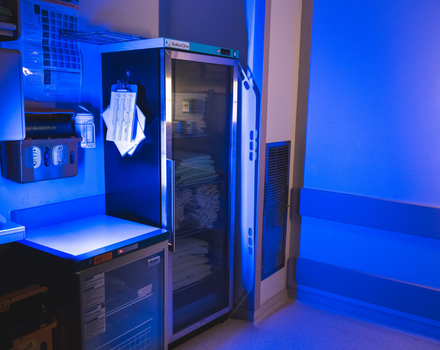
Thanks to donor support, the Arrhythmia Program now has a new blanket warmer directly in the department.
That means staff can reach for a warm blanket as soon as a patient needs one. In the Electrophysiology Lab alone, the team estimates the warmer may support around 10 patients on an average day and up to 15 on busier days. In the Catheterization Lab, the volume is even higher, at approximately 25 to 30 patients per day.
The new warmer also replaced aging equipment that had required frequent attention from Facilities Management, freeing that team to focus on other equipment and systems across the hospital.
There are many things a patient might remember about having a cardiac procedure. And perhaps they will remember the warmth too—made possible by donors who saw patient comfort as something worth investing in.